
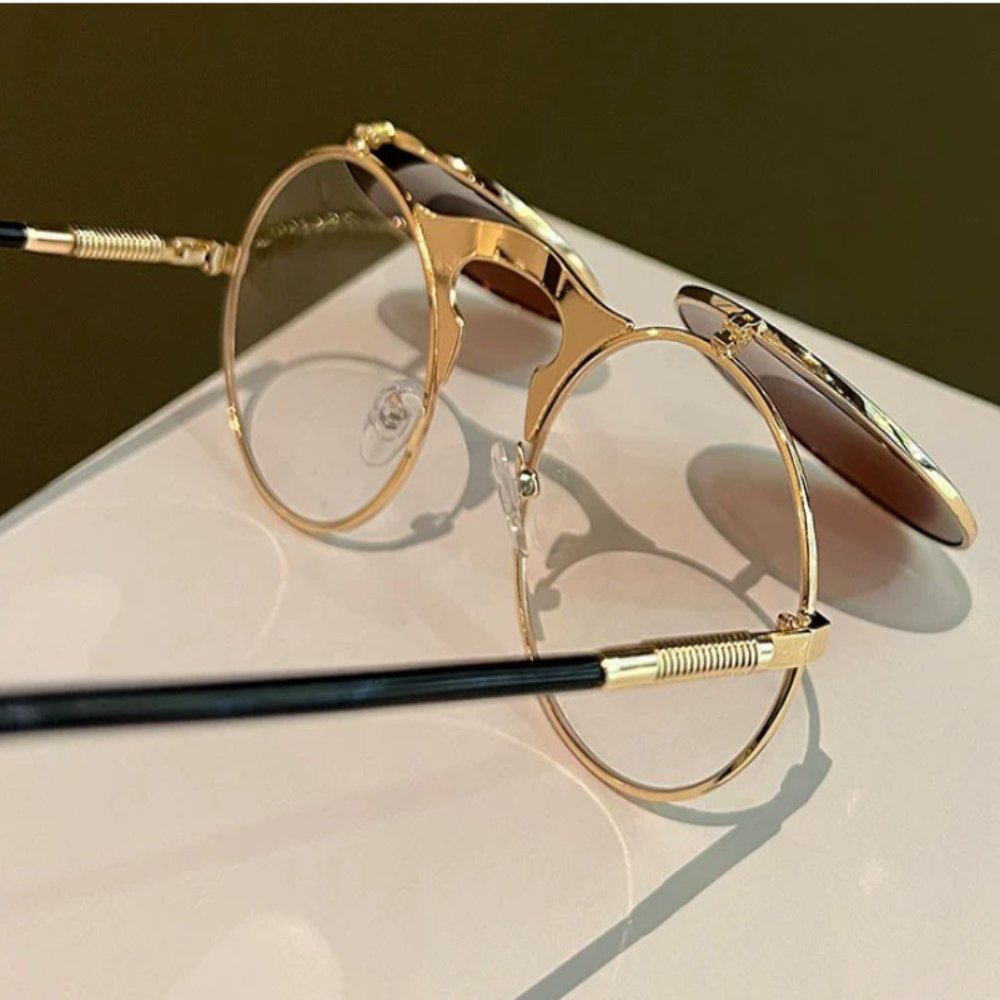
For a flip-up eyewear RFQ, ask Ruixing Punkeyewear to identify the component that moves and label the corresponding frame and lens references for the actual offer. Model3057 provides an official visual reference, but its displayed position does not establish which parts are removable, replaceable or separately supplied. Keep component identification separate from optical-power, protective and mechanical-performance questions. A supplier-marked reference should make clear what belongs to the proposal without requiring the buyer to reconstruct the assembly from the photograph.
Identify model3057 before interpreting the assembly
Attach the exact model3057 product link and identify the official view used in the enquiry. Ask the supplier which offered version corresponds to that reference. Keep the model and quotation identity together so a component description for another eyewear design does not silently become the explanation for this offer.
The source names flip-up sunglasses and shows a raised outer presentation. Use that appearance to locate the purchasing question rather than assigning a complete assembly description. The supplier should identify the actual offered components and the relationship between them before the buyer adopts a shorthand name for the whole product.
Ask the supplier to mark the moving part
Request a labelled reference identifying the component described as moving in the offered design. Ask the supplier to distinguish that component from the main frame and any other part visible in the view. A raised position helps identify the question, but it does not explain every component boundary or supplied connection.
Keep the supplier’s own component references attached to its explanation. Do not assume that two visible outlines are independently supplied products, or that a familiar appearance establishes how the parts are connected. The purpose is to obtain an identified proposal, rather than to derive an assembly method from the image.
Reference to identify | Supplier question | Keep with the proposal
Moving component | Which named component moves in this offered version? | Labelled product reference
Main frame | Which parts belong to the main frame reference? | Separate supplier component description
Lens references | Which lens or lens-group description applies to each part? | Component-linked supplier statement
Connection hardware | What component reference describes the connection? | Applicable manufacturer information if required
Additional items | Are any parts supplied separately? | Explicit inclusion or separate proposal
Keep lens descriptions attached to their component
Ask the supplier which lens description belongs to each identified component in the actual offer. A general lens term should not be applied automatically to every visible layer. If the supplier groups parts under one description, request its explanation of the scope so the buyer knows which component information has been confirmed.
A clear-looking or tinted-looking surface in a photograph does not establish optical power, a filter property or a protective result. Request any relevant optical or product information separately for the actual version. Do not assign a prescription status or technical lens property solely from the way the reference image appears.
Separate flip-up wording from removal or replacement
A flip-up category name does not establish that the moving assembly can be removed or that a lens is replaceable. If the buyer needs information on those subjects, request the applicable manufacturer statement. Keep an unanswered question open instead of importing a capability from another eyewear design.
Do not suggest dismantling the frame to identify a component or infer an operation sequence from the displayed position. The supplier should provide relevant documentation for the offered version where required. Keep any separately proposed component or service identified as its own supply question rather than an assumed feature of the product.
• Connect the component map to the actual model and quotation.
• Identify the moving part separately from the main frame.
• Attach each lens description to its confirmed component scope.
• Keep removal, replacement and additional supply as separate questions.
Keep component identification separate from claims
A labelled component map does not independently demonstrate hinge durability, retention performance or a tested operating result. The source’s component terms should remain catalogue references until the supplier provides applicable information for the offered version. Request any required assessment separately from the identification decision.
The same boundary applies to UV, polarization, optical power and other lens-related claims. None follows from identifying the part that moves. Keep any claim-specific requirements tied to the exact product and supplier information, without treating the product photograph or a category name as verification of an optical or protective outcome.
Send a moving-component clarification request
An enquiry can read: For the linked model3057 offer, please provide a labelled reference identifying the moving component, main frame and corresponding lens references. Explain which component descriptions apply to each part. State separately whether any removal, replacement or additional supplied item is proposed, with applicable manufacturer information where required.
Retain the accepted component statement with the quotation identity. Request a replacement map if the offered assembly or lens scope changes. This gives the buyer a clear procurement reference without reconstructing the mechanism from a photograph or promising an unverified mechanical, optical or protective performance result.
Frequently asked questions
Does a raised component prove it is removable?
Ask the supplier for the applicable manufacturer statement; a displayed position does not establish removal capability.
Can one lens description be applied to every visible layer?
Request component-linked lens information for the actual offered version.
Does a clear-looking lens establish optical power or prescription status?
No. Obtain any required optical information separately rather than assigning properties from appearance.
Does the component map verify hinge durability or UV performance?
Keep any required mechanical and lens-performance evidence separate from component identification.
Product and contact references
Product reference: https://rxpunkeyewear.com/product/3057/
Related eyewear models: https://rxpunkeyewear.com/products/
Contact Ruixing Punkeyewear: https://rxpunkeyewear.com/contact/
Ruixing Punkeyewear blog: https://rxpunkeyewear.com/blog/